
Laser Tattoo Removal
A fresh start for your skin.
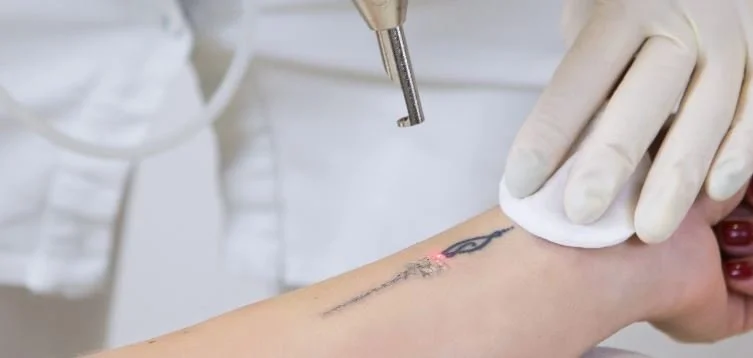
At Lips and Drips, we offer laser tattoo removal to help reduce the appearance of unwanted tattoos and give you the opportunity for a fresh start.
Whether you are looking to remove an old tattoo, fade an existing design for a cover-up, or simply move on from something that no longer represents you, laser tattoo removal can help gradually break down unwanted tattoo pigment.
Using targeted laser energy, the treatment works by breaking tattoo ink into smaller particles, allowing your body's natural immune system to gradually clear the fragmented pigment over time.
With a personalised treatment approach, we aim to achieve the best possible result while prioritising the health and safety of your skin.
What is Laser Tattoo Removal?
Laser tattoo removal is a non-surgical treatment that uses concentrated pulses of light energy to target tattoo ink beneath the skin.
The laser energy is absorbed by the tattoo pigment, breaking it into smaller particles. Your body's immune system then gradually removes these particles through its natural processes.
Different tattoo colours absorb different laser wavelengths, meaning treatment settings and laser selection are tailored to the individual tattoo.
Multiple treatments are generally required, as the ink needs to be broken down gradually while allowing your skin and body time to recover between sessions.
What can Laser Tattoo Removal treat?
Laser tattoo removal may be suitable for reducing the appearance of:
Unwanted professional tattoos.
Amateur or homemade tattoos.
Older tattoos.
Newer tattoos, once sufficiently healed.
Small or large tattoos.
Selected cosmetic tattoos, following specialist assessment.
Tattoos you wish to fade in preparation for a cover-up.
Not all tattoo pigments respond equally to laser treatment. Some colours and cosmetic tattoo pigments can be particularly challenging to remove.
How does the treatment work?
During treatment, the laser delivers short pulses of energy into the tattooed skin.
This energy targets the tattoo ink while aiming to minimise damage to the surrounding skin.
The fragmented pigment is gradually cleared by your body's immune system over the weeks following treatment.
As each session breaks down additional pigment, the tattoo should progressively fade.
How many treatments will I need?
Laser tattoo removal is a gradual process, and multiple sessions are generally required.
The number of treatments will depend on several factors, including:
Tattoo size.
Ink colours.
Ink depth and density.
Age of the tattoo.
Type and quality of ink.
Tattoo location.
Your skin type.
Your individual immune response.
Some tattoos may require only a few sessions, while others may require considerably more.
Complete removal cannot be guaranteed. Some tattoos may leave residual pigment, a faint outline or changes in skin texture.
Your practitioner will assess your tattoo and provide an estimated treatment plan during your consultation.
Does Laser Tattoo Removal hurt?
Discomfort varies between individuals and depends on the tattoo's size, location and treatment settings.
Many clients describe the sensation as similar to a rubber band snapping against the skin.
Comfort measures may be discussed during your consultation.
How long between treatments?
Your skin needs adequate time to heal and your body needs time to clear the fragmented ink particles.
Treatment intervals are generally spaced several weeks apart, often around 6–8 weeks or longer depending on the tattoo, treatment response and clinical protocol.
Treating too frequently does not necessarily improve results and may increase the risk of complications.
Your practitioner will advise when it is appropriate to return for your next session.
What should I expect after treatment?
Following laser tattoo removal, it is normal to experience some temporary skin reactions.
These may include:
Redness.
Swelling.
Tenderness or sensitivity.
Temporary whitening or frosting of the treated area.
Small blisters.
Scabbing or crusting.
Temporary changes in skin pigmentation.
These reactions form part of the healing process, although their severity varies between individuals.
Preparing for your treatment
To help minimise complications and support the best possible outcome, we recommend:
Avoid sun exposure and tanning before treatment.
Do not attend with sunburn or irritated skin.
Avoid fake tan on the treatment area.
Keep the tattoo clean and free from infection.
Inform your practitioner of all medications and supplements.
Disclose any medical conditions that may affect healing.
Inform your practitioner of any previous tattoo removal treatments.
Follow all personalised pre-treatment instructions.
Aftercare
Proper aftercare is essential following laser tattoo removal to support healing and reduce the risk of complications.
We recommend:
Keep the treated area clean and follow your practitioner's cleansing instructions.
Apply any recommended healing ointment as directed.
Keep the area protected as advised by your practitioner.
Avoid picking, scratching or removing blisters or scabs.
Do not rub or exfoliate the treated area.
Avoid swimming pools, spas and soaking the area until it has healed.
Avoid excessive heat, strenuous exercise and activities that cause excessive sweating during the initial healing period.
Avoid direct sun exposure.
Protect the area with clothing and apply SPF 50+ once the skin has healed sufficiently to tolerate sunscreen.
Allow the skin to heal fully before your next treatment.
Potential risks and side effects
Although laser tattoo removal is a commonly performed treatment, there are potential risks and complications.
These may include:
Redness and swelling.
Blistering.
Scabbing and crusting.
Infection.
Temporary or permanent pigmentation changes.
Lightening or darkening of the surrounding skin.
Changes in skin texture.
Burns.
Scarring.
Incomplete tattoo removal.
Allergic or inflammatory reactions to fragmented tattoo pigment.
Certain ink colours, particularly cosmetic and flesh-toned pigments, may react unpredictably to laser treatment.
Your practitioner will discuss the risks relevant to your individual tattoo and skin type before proceeding.
Frequently Asked Questions
Can all tattoos be completely removed?
Not all tattoos can be completely removed. Results depend on ink colour, depth, density, tattoo age and individual response. Some tattoos may leave a faint outline or residual pigment.
Will my tattoo disappear after one treatment?
No. Multiple sessions are generally required. Each treatment gradually breaks down additional pigment, allowing your body to clear it over time.
Can I have a tattoo removed to make room for a cover-up?
Yes. Laser tattoo removal can be used to fade an existing tattoo before a cover-up. Your tattoo artist can advise how much fading is needed before a new design is applied.
Can newer tattoos be removed?
Newer tattoos may be treated once they have fully healed and your practitioner confirms they are suitable. Treatment should not be performed on fresh or healing tattoos.
Will laser tattoo removal leave a scar?
The aim is to remove or fade tattoo pigment while minimising damage to the surrounding skin. However, scarring and changes in skin texture are possible, particularly if complications occur or aftercare instructions are not followed.
Can coloured tattoos be removed?
Many coloured tattoos can be treated, but some colours respond less predictably than others. Your practitioner will assess the ink colours and available laser wavelengths before recommending treatment.
How long does each appointment take?
Treatment time depends on the size and complexity of the tattoo. Smaller tattoos may take only a few minutes, while larger tattoos require longer appointments.
Can I have another tattoo over the treated area?
A new tattoo may be possible once the treated skin has completely healed and your practitioner confirms it is appropriate. If you are planning a cover-up, discuss this before beginning your removal treatments.